
CJC-1295 No DAC / Ipamorelin Blend vs. Separate Vials: What is the Real Product Difference?
In this article
Summary / Quick Answer: A CJC-1295 No DAC and Ipamorelin blend combines two lyophilized peptides in a single vial, typically at a fixed 1:1 ratio (e.g., a 10mg vial contains 5mg of CJC-1295 No DAC and 5mg of Ipamorelin). The primary difference between a pre-mixed blend and buying separate vials comes down to convenience versus control. A blend requires only one reconstitution process and ensures a consistent fixed ratio, ideal for standardized protocols. Separate vials require double the handling but allow researchers, clinics, and formulators absolute control to adjust the ratio (e.g., 1:2 or 2:1) as needed.
When navigating the peptide market—whether you are managing a clinic, operating a medspa, or conducting independent research—one of the most common purchasing decisions involves CJC-1295 No DAC and Ipamorelin.
Because these two compounds act synergistically on the pituitary gland, they are frequently researched together. However, buyers face a practical choice: Should you purchase a pre-mixed blend in a single vial, or buy two separate vials?
This guide breaks down the exact product differences, the mathematics of lyophilized blends, and how to choose the right format for your high-volume distribution or specific research needs.
Understanding the "No DAC" Designation
Before comparing formats, it is critical to define the compound. CJC-1295 No DAC (often referred to as Modified GRF 1-29) lacks the Drug Affinity Complex (DAC). Without the DAC, the peptide has a shorter half-life (around 30 minutes) compared to standard CJC-1295 with DAC (which lasts for days). This shorter half-life closely mimics natural physiological pulsatile release, making it the preferred partner for Ipamorelin, a highly selective GHRP (Growth Hormone Releasing Peptide) that also operates on a shorter, acute timeline.
For raw materials and high-purity single compounds, you can view our CJC-1295 No DAC catalog here.
The Pre-Mixed Blend: Convenience and Consistency
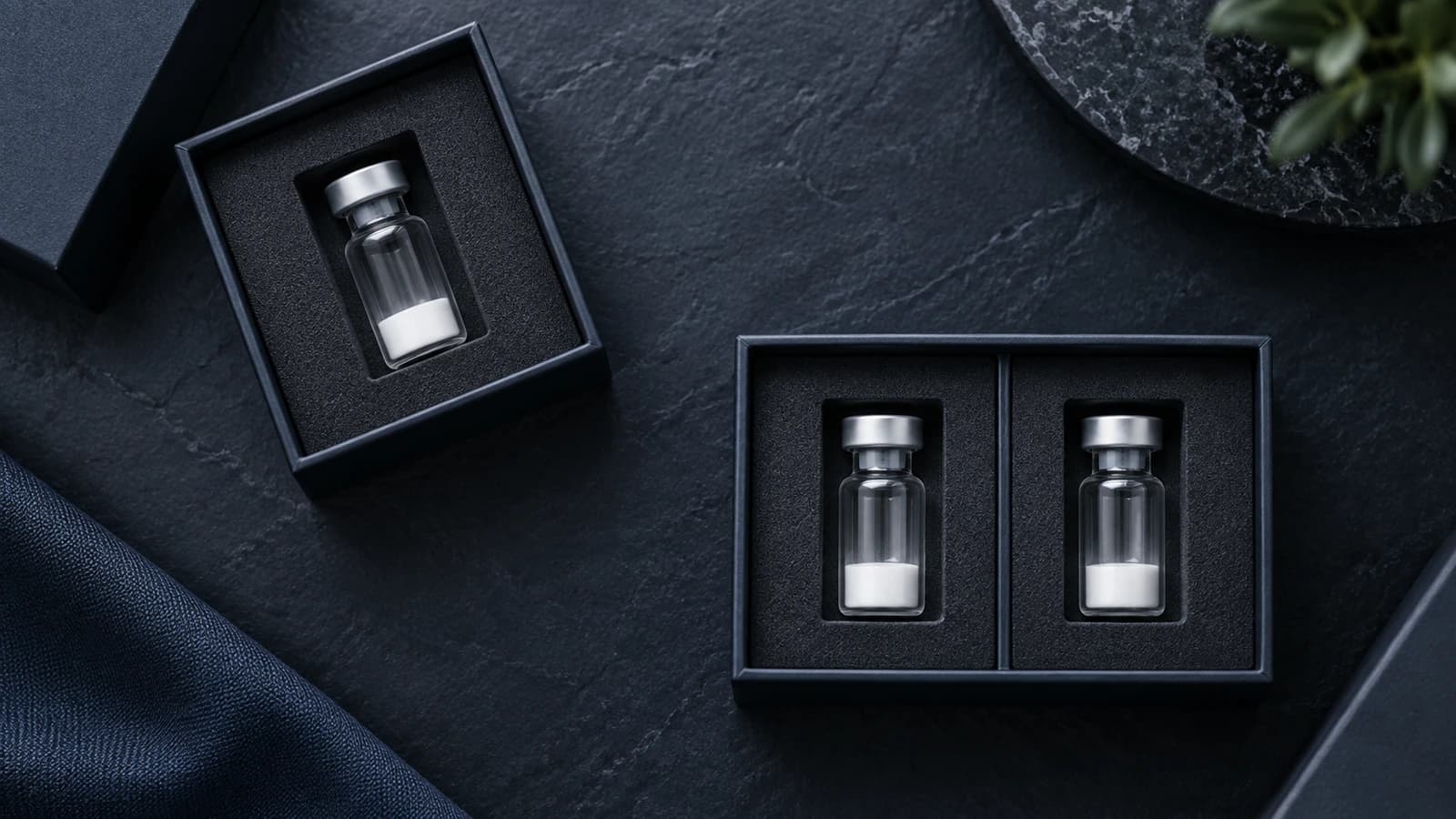
A CJC-1295 No DAC / Ipamorelin blend features both peptides freeze-dried together in one single vial.
What is the Ratio? The industry standard for this blend is a 1:1 ratio. If you purchase a "10mg blend vial," it does not mean 10mg of each; rather, it contains:
- 5mg of CJC-1295 (No DAC)
- 5mg of Ipamorelin
Similarly, a 5mg blend vial contains 2.5mg of each. Some vendors explicitly label this as "5/5" or "10/10" to clarify the split.
The Advantages of Blends:
- Single Reconstitution: You only need to add bacteriostatic water to one vial, reducing handling time and minimizing the risk of contamination during the preparation phase.
- Fixed Consistency: For clinics or resellers providing standardized protocols, a fixed 1:1 ratio removes the guesswork and ensures uniformity across all batches.
- Cost and Storage Efficiency: One vial takes up less inventory space than two, streamlining logistics for bulk buyers.
Separate Vials: Ultimate Formulation Control
Buying the peptides separately means you receive one vial of pure CJC-1295 No DAC and one vial of pure Ipamorelin.
The Advantages of Separate Vials:
- Ratio Flexibility: Not all research protocols call for a 1:1 split. Purchasing separate vials allows a lab to control the exact mixture. You can easily test a 1:2 or 2:1 ratio by drawing different volumes from each reconstituted vial.
- Independent Titration: If a specific compound requires a dose adjustment based on the subject's response, separate vials allow you to isolate and modify the input of one peptide without altering the other.
- Staggered Administration: While usually administered together, having separate vials allows for asynchronous timing if the experimental protocol demands it.
The Trade-off: The cost of this flexibility is extra handling. It requires two reconstitutions, double the vials in cold storage, and more precise math during the administration phase.
Which Format is Right for You?
- For Clinics and Medspas: The pre-mixed blend is generally the preferred choice. It simplifies inventory, reduces reconstitution errors by staff, and standardizes the product.
- For Researchers and Formulators: Separate vials provide the necessary modularity for rigorous scientific testing and variable dose-finding studies.
- For Wholesale and Resellers: Offering both options is often the best strategy to capture the entire market.
The Kivapep Solution: Custom Synthesis & Quality Assurance
At Kivapep, we specialize in Custom Peptide Synthesis & High-Volume Reagent Distribution. We understand that off-the-shelf 1:1 blends may not meet the exact specifications of every enterprise.
If your clinic or brand requires a unique ratio—such as a 2:3 blend or a combination involving other peptides like BPC-157 or Thymosin Alpha-1—our state-of-the-art facility can manufacture Custom Formulas to your exact lyophilized specifications.
Why Partner with Kivapep?
- Verified Purity: Every batch undergoes strict Quality Control via HPLC and MS testing. You can always verify the COA (Certificate of Analysis) directly on our portal.
- Bulk & Private Labeling: We offer extensive Wholesale and Private Label services, empowering you to scale your brand efficiently.
- Direct Manufacturer Pricing: By bypassing the middlemen, we provide premium peptides at competitive high-volume rates.
Ready to scale your peptide inventory? Explore our full Product Catalog, or reach out for a custom bulk order via our Request a Quote page. For immediate B2B inquiries, connect with our team via Sales Chat or visit our Contact Page.