
Troubleshooting CJC-1295 Reconstitution: Cloudy, Gritty, or Gelled Appearance
In this article
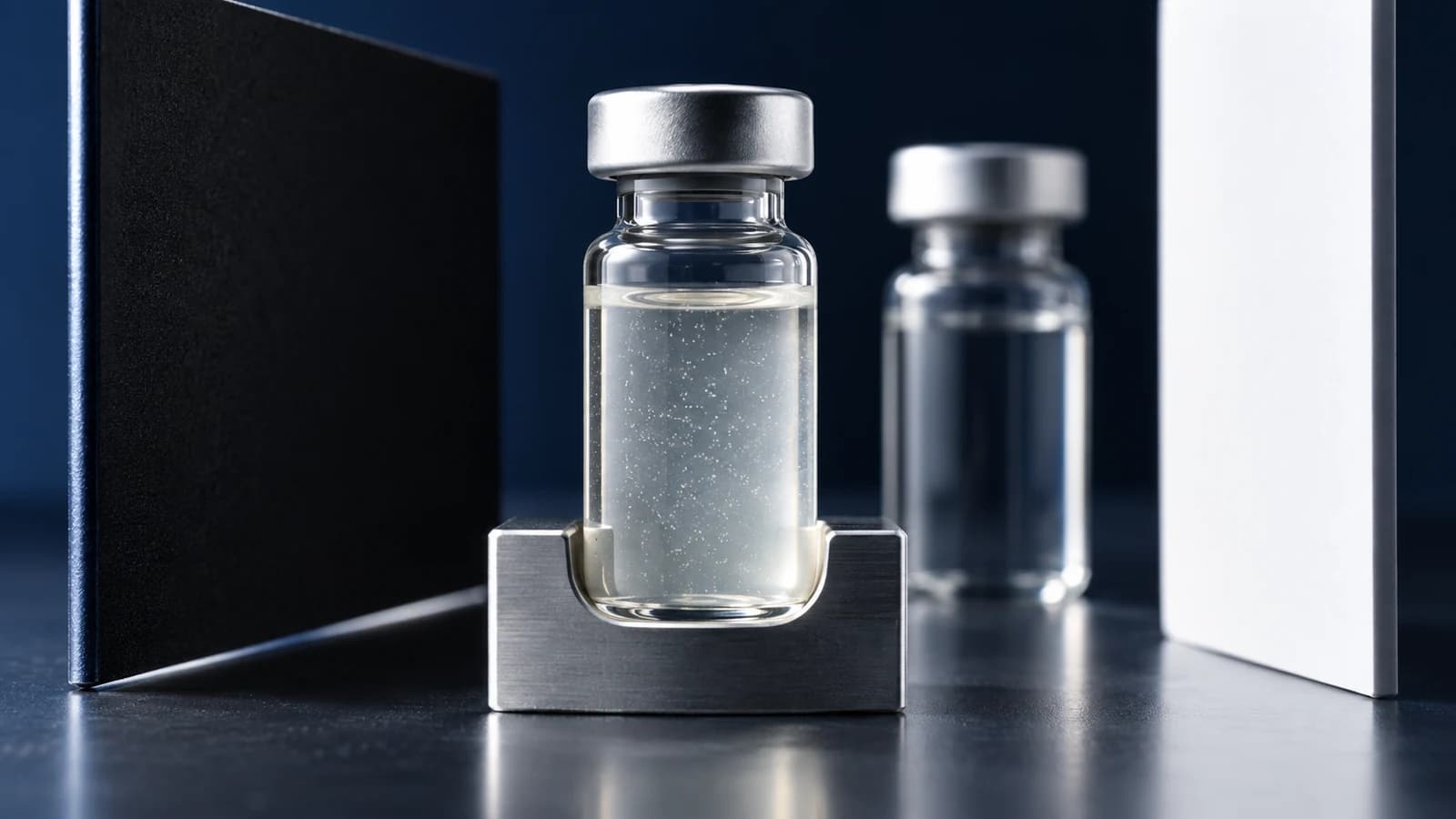
When reconstituting lyophilized peptides for research or clinical applications, clarity is usually the first indicator of a successful mix. However, instances of CJC-1295 becoming cloudy, gritty, or gelled after adding a solvent are a recurring concern.
A recent discussion in the peptide community highlighted this exact issue: a user posted about their CJC-1295 mixture being "very bitty and cloudy" and even appearing to have a strange blue tint. While some attributed it to the pH of the bacteriostatic water (BAC), others pointed out optical illusions caused by the vial's label.
For clinic owners, researchers, and high-volume resellers, inconsistent reconstitution wastes money and disrupts protocols. In this guide, we will break down the root causes of reconstitution issues, how to troubleshoot product batches and solvents, and why visual clarity alone is never a guarantee of safety or sterility.
Why Does CJC-1295 Turn Cloudy or Gritty?
Researchers often analyze the solubility of peptides. CJC-1295, a tetrasubstituted peptide, has specific chemical characteristics that make its reconstitution highly dependent on environmental factors.
1. Solvent pH Sensitivity
CJC-1295 is highly sensitive to the pH of the diluent. Standard Bacteriostatic Water (BAC) contains 0.9% benzyl alcohol, which generally has a slightly acidic pH. If the diluent's pH falls outside the optimal solubility range for the specific salt form of the CJC-1295 batch, the peptide molecules may fail to dissolve completely, resulting in a milky or cloudy appearance.
2. Peptide Salt Forms (TFA vs. Acetate)
Raw peptides are typically synthesized as Trifluoroacetate (TFA) salts. High-quality manufacturers convert these into Acetate or Hydrochloride salts, which are far more stable and soluble. If a low-quality batch retains a high TFA content or impurities, the peptide may clump or form a gel-like substance instead of dissolving smoothly.
3. Lyophilization (Freeze-Drying) Errors
During the freeze-drying process, if moisture is introduced or the vacuum seal is compromised, the peptide "cake" inside the vial can degrade. This often leads to a gritty texture ("bitty") that simply refuses to dissolve, no matter how much solvent you add.
4. Visual Illusions and Contaminants
As noted in community discussions, sometimes the issue is visual. A poorly placed, highly reflective, or colored label (like blue or green) can reflect through the glass, making the liquid appear tinted. However, true floating particles or sustained cloudiness indicate a chemical or physical failure.
How to Troubleshoot Reconstitution Issues
If you encounter a cloudy or gelled vial of CJC-1295, follow these troubleshooting steps to identify the point of failure:
- Check the Solvent: Ensure your Bacteriostatic Water is fresh, in-date, and from a medical-grade source. Expired or degraded BAC water can alter the pH and ruin the peptide.
- Review the Product Batch: Check the Certificate of Analysis (COA) for your specific batch. Look for purity levels above 99% and verify the peptide content.
- Assess the Environment: Cold temperatures can slow down dissolution. However, you should never aggressively shake a peptide vial.
CRITICAL SAFETY WARNING: Some users attempt to warm the vial or let it sit for 24 hours to see if the mixture clears up. Please be aware: even if the solution eventually turns clear, visual clarification does not prove sterility, verify the identity of the peptide, or indicate that it is safe for human use. A compromised reconstitution process often points to bacterial contamination, degraded solvents, or impure synthesis. When in doubt, discard the vial.
The Kivapep Standard: Ensuring Premium Peptide Quality
As a leader in Custom Peptide Synthesis & High-Volume Reagent Distribution, Kivapep ensures that issues like cloudiness, gelation, and grittiness are eliminated at the manufacturing level.
We utilize advanced lyophilization techniques and strict salt-exchange protocols to guarantee optimal solubility. Every batch undergoes rigorous Quality Control, including HPLC and MS testing, to ensure maximum purity.
Whether you are a clinic owner looking for reliable supplies or a reseller needing bulk orders, we offer transparent, verifiable data. You can always Verify our COAs before purchasing.
Explore Our Premium Offerings:
- CJC-1295 NO DAC: Engineered for flawless solubility and high stability.
- BPC-157: Our flagship regenerative research peptide.
- Thymosin Alpha-1: High-purity peptides for immune-focused research.
- Custom Formulas & Custom Peptide Synthesis: Tailored to your specific structural and quantity requirements.
Ready to upgrade your peptide supply chain? Browse our full Product Catalog, or if you need large-scale manufacturing, visit our Wholesale & Private Label page.
Connect with Kivapep today:
- Request a Quote
- Contact Us
- Need immediate assistance? Talk to our experts via our Sales Chat.